Showing posts with label Early Lovecraft. Show all posts

Tuesday, 10 November 2015

Before Cthulhu: Lovecraft's Early Eldritch - Part Three


Under the Pyramids - 1924
(Offerings to the Deity)

Continuing with our third and last installment of H.P Lovecraft's work, before the emergence of the Cthulhu Mythos - "Before Cthulhu: Lovecraft's Early Eldritch" - we come now to the three years of 1922, 1923 and 1924; the arguably latter period of Lovecraft's early career in which the themes and visions of later years would become powerfully nascent. As found in the two earlier periods - at least discerned in these installments - we discover potent and powerful streams which contour and color Lovecraft's narratives into the 1920's and from whose seed would ultimately flourish things more singular and remarkable. Beginning in 1917 and further maturing as the decade turned to the 1920's, Lovecraft's talents would allow for a particular vision of eldritch narratives to emerge, though pregnant with philosophical, cosmological and unique vistas on the human condition and its place in an ever stranger world - this and others, as the writer would strain to show. The two latter periods having been colored by remarkable work already, the emerging mid 20's would find the writer refining and honing these singular visions into an ever more integrated school which would, in time, find the birth of his famed "Cthulhu Mythos" following the debut of the titular malign god in "The Call of Cthulhu" come 1926. Still, some time from then, the years of 1922 - 1924 would prove compelling and an essential crystallization of that which would animate and ordain the gods, monsters and peoples of his tales, to follow in Cthulhu's shadow.

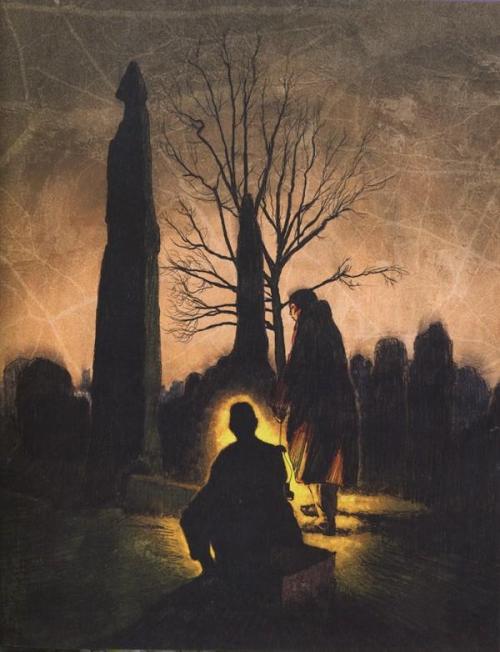
The Lurking Fear and Other Stories
(Horror Anthology - 1922)
As so often with Lovecraft the power of the unknown and the potency of revelation inform many of his works, and are particularly nascent in his tales of this particular period; protagonists, often wary but otherwise unknowing, stumbling upon terrifying and astounding things - these same visions often a trigger or prelude to weirder and terrible visions yet to come. Such can be said of "What the Moon Brings" as the lone narrator is enveloped by a strange vision and eventually confronted with a terrible, giant image of stone which seemingly impels them to madness and perhaps death. A haunting, murky vision of the unknown and the secrets that the waves obscure, this power of revelation found a little more classical and personal focus in a later story called "The Hound" of October the same year. A pair of decadent, ever curious grave robbers seek to add to their occult collection of the macabre, though exhuming the remains of a like minded man to steal a strange, jade amulet leads to first haunting and then death; a prelude of distant howling marking the advance of something terrible and undead.

Of course, in another singular flourishing of Lovecraft's penmanship, revelation is lent a deeper shade of horror when intimate: more than just bodily horror but that which is deemed to be inherent or innate as to anticipate a common destiny or nature. The horror that may come from this potently illustrated - perhaps even to incendiary ends, like 1921's Arthur Jermyn - this notion of destiny and inheritance is keenly portrayed in "The Rats in the Walls". The title itself anticipating unwholesome things, the peculiar scratching a man hears behind the walls of his antique family home is only an innocent prelude to what he discovers in the cavernous reaches under the house; of his and other people's doings and where purpose intermingles to create many a dark, fleshy thing to abhor. The legacy of isolation, the break down of moral and bodily norms, compounded by strange or bygone beliefs was given vivid exploration earlier in 1922's "The Lurking Fear" - a story in many ways the American counter to the later tale of English country homes with strange families and dark pasts: an investigation of murder in a New England village leading to the discovery of monstrous, bestial creatures descended from a withdrawn family of former Dutch colonists, centuries before. One of Lovecraft's many serials, the story itself was both conventional and powerful in its cultural horror, though remarkable in fashioning a Lovecraftian narrative into a serial, at the request of the commissioner.

The early 1920's would also see some fruition of the growing relationship between Lovecraft and one Sonia Greene - his future wife - in which Sonia was encouraged to publish and write herself; an effort which saw two stories as found in 1922 "The Horror at Martin's Beach" and the later "Four O'clock". The growing social element of Lovecraft's life would see him move to New York City and the tense, sometimes difficult life he would have there with his wife: social, philosophical and ethnic questions dogging his experience of the city and its growing, diverse population of immigrants, along with the more established people of the metropolitan hub. The alienation and detachment from the throb of NYC's eclectic citizenry a major element of his life there, it would become a perennial concern - even obsession - to the self styled New England man and his preconceptions of American identity: symptomatic of deeper opinions which would manifest in his work, all throughout his life.
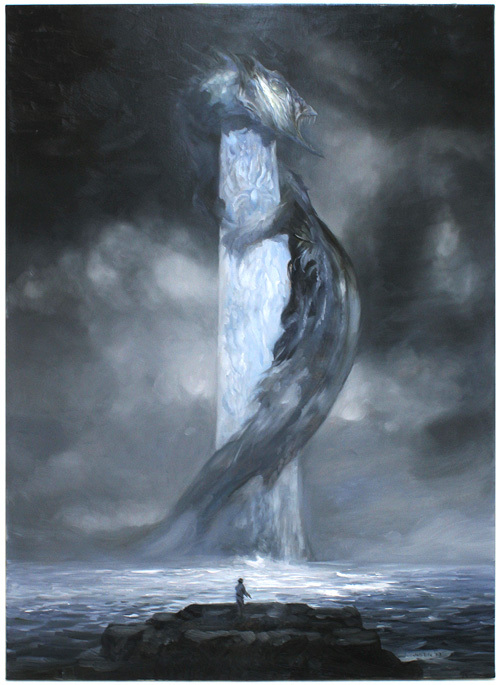
What the Moon Brings - 1923
(The Image amid the Ruins)

The nature of the aforementioned inner horror - compounded by notions of destiny and nature - are reflected upon more acutely and given to wider dimensions when associated with the occult, bygone esoterica and strange rites. This is borne out in 1923's "The Festival" as a visitor to New England happens upon strange, dark rituals practiced in secret within an old town, and in which his relatives freely participated. The encounter surrendering the protagonist almost to madness, they recuperate in Arkham; reflecting upon the strange, terrible pertinence of the Necronomicon - the strange tome returning again in a Lovecraft story - and to shine light on horrible magics that make certain things pulse with life, as he saw in that ancestral town. A return to older places, shadowed by strange things and happenings, is found a little earlier in 1923 as "The Unnamable" was penned. Returning us to the town of Arkham and an ancient house close by, Randolph Carter - returning though ostensibly at an earlier period of life - encounters a friend; and there mutual encounter with a demonic spirit of amorphous nature which leaves both men beaten and gored, but alive. A creature - supposedly beyond human senses - which leaves little doubt as to its nature as the titular "The Unnamable" which lingers about the house and surrounding land.

Strange discoveries and sudden, breaching glimpses of the unknown are not alien to Lovecraft, though such is the focus of a strange, quite eldritch vignette - if it can be called that - called "Azathoth", penned though remaining as a fragment of some perhaps wider narrative in 1922. The titular god not appearing, the story follows in the way of a man living in a grey, drained dystopian city of grey towers. One man, so doubting this world, finds his visions opening unto cosmic places beyond and, one night, is delivered from his apartment to elsewhere, perhaps some unknown dimension once glimpsed in prelude to what begins. Though only a fragment of what might have been, the story has a lilting quality which anticipates the wider cosmic and unknown, so very prevalent and resonant in some of the best Lovecraft stories. Also, and to a great degree, we find the theme of revelation and discovery amid the cracks in our reality; be they physical or spiritual and often to incredible consequences, in the discovery of what lies beyond. In the words of one Lovecraft fan.

"The notion that present day structures could sit atop more ancient manifestations of cosmic phenomena, I think, is a classic Lovecraft motif. You dig down as deep as the ziggurats and there's more; you think you're at the basement - the metaphysical basement - but you're not. You need to dig even deeper."
Paul De Philipo,
Science Fiction writer and Providence resident.


Speaking in late 2006 for a BBC documentary on Lovecraft's life and the salience of a certain house in Providence, his words were a keen summation of Lovecraft's story "The Shunned House" in 1923. An ancient house with a dark, besmirched past has cast a shadow over the adjacent neighborhood for centuries. Attracting two paranormal researchers - intent on getting to the bottom of the paranormal activity and haunting - they ultimately discover that the root of the house's dark past, the fate of its residents and the strange rites associated with it all draw from a common point: something terrible and monstrous as might be understood by this quote of the Necronomicon: "That is not dead which can eternal lie, and with strange eons even death may die." This singular vision of the cosmic and occult unknown in places once thought, if not banal, then tempered is given to a particularly potent and powerful expression in a commissioned work by the legendary escapologist Harry Houdini, published in 1924.

The Shunned House - 1923
(What Lies beneath the Cellar)
Originally titled "Buried with the Pharaohs", the story ultimately called "Under the Pyramids" finds a supposed recollection of a powerful, frightening occult experience by Harry, when visiting Egypt in 1910. Tricked and kidnapped by a group of mysterious men, he is lowered into an unknown chasm close to the Sphinx, not far from the Pyramids of Giza. While there, assailed by dreams and horrendous visions, he eventually escapes; but only then to bare witness to a horrific sight as the shadows of ancient Egypt take terrible form, and for an awful purpose as Harry beholds the answer to the riddle of the Sphinx, and of what dark forces still revere such a thing. The story notable in its incidence of Egyptian mythology and history, the narrative is potent, vivid and sometimes darkly captivating in its cadence as its lone protagonist is thrust into the shadows of mysterious danger - and more so, for the gravity of what he finds that one, moonlit night. The narrative taken in the wider context, the story is rich with potent allusions and may even figure the presence of that malign god Nyarlathotep, among the dark pageantry that is found latterly. Though, found within the morphology of Lovecraft's writings, the tale does comport to a certain eldritch vision; mingling the personal, occult and cosmic into a resonant horror of that beyond the worlds we know.

The early 1920's witnessing the nascence of Lovecraft's cosmological vision in the writer's literature, it's perhaps easier now to see the roots - the philosophical essence - of that which would coalesce into the mythos, seen after the debut of Cthulhu. Emerging from among the author's inspirations and ultimately assimilating them too, the stories of Lovecraft's early career from 1917 to 1924 are eclectic and vivid in what they proffer to a reader: their vision more so when taken together, allowing for the respective stories to aggregate something more than just their sum. Of course, that sum remarkable in itself, the latter reality of Lovecraft's work conjures something more; baring out a continuum in which the emergent mythos stories are a perhaps abrupt, strange delivery into the unfolding world - and its sometimes bizarre, incredible and grotesque realms beyond.

This seen in both the beginnings of the mythos and the interwoven Dream Cycle, the singular world we encounter has both captivated, compelled and inspired generations of readers, and will seemingly continue to do so. Concluding this last installment of this short series, I hope to have elucidated on the origin of the Cthulhu Mythos, as found in the stories penned sometime before and the stories which bore through the cosmological and philosophical narrative between 1917 and 1924; going on to become cardinal elements in the alchemy of Lovecraft's vision of the occult, the unknown and the strange natures found all about, and therein.

As before, please find below audio renditions of some notable stories from this latter period of Lovecraft's early career; so following in Azathoth, The Hound, The Unnamable, The Shunned House and Under the Pyramids, along with summations of their stories.


Azathoth -1922

One of Lovecraft's most remarkable and enigmatic works which survives as a fragment of what could have been more, given time. In a grey dystopia, a solitary man goes about his unassuming life until his perception is widened and he begins to muse on the secret, hidden and untold dimensions beyond our own. Where this new knowledge and instinct will lead him may be very well beyond our world, as we know it.


The Hound -1922

Moved by their tedium to incredible acts of audacity and macabre interest, two grave robbers hear of a particular grave within which lies entombed a remarkable relic. Their collection of macabre and occult relics already swollen, the allure of this is too great, and soon a particular amulet is in their keeping - until a strange howling, as if of a distant, great canine - begins to haunt them. Both may soon discover the unsavory price for their curiosity, when disturbing the dead.


The Unnameable -1923


Randolph Carter returns - albeit a more tempered mind just beginning his occult foray - as a trip to Arkham to investigate a reputedly haunted house and its surrounding land allows a reunion with an old friend. It is here that Randolph may come to appreciate that the haunting of the old property belies a far more immediate, and terrifying, presence for both men in the singular, ineffable entity that lingers nearby.


The Shunned House -1924


A strange story of cursed abodes, dark histories and what curiosity may unearth. A particularly ancient house in Providence, Rhode Island, captures the interest of paranormal researchers: their investigation coming atop of the house's long, peculiar history as a site of unnatural things, frequent death and haunting. Seeking the cause or some manifestation of this power, both may come face to face with the root of the strange legacy within the shunned house.


Under the Pyramids -1924

A remarkable work, latterly heralded as some of Lovecraft's best efforts in his early career, finds a tale told on behalf of the famed escape artist Harry Houdini, and a particular trip to Egypt in the year 1910. Here, in the shadow of myth, magic and occult histories, the protagonist is confronted with antique horrors which may only be a prelude to something far grander and sinister, hidden away for millennia under the sands; lying at the heart of many terrible things, as Harry may only bare witness to.



Monday, 7 September 2015

Before Cthulhu: Lovecraft's Early Eldritch - Part Two


The Other Gods - 1921
(The Peak of Mt. Hatheg-Kla)

The second part of our journey through the early writing of H.P Lovecraft finds us passing through the years of 1920 and 1921: the more middle periods of what I have come to describe as Lovecraft's "early eldritch" before the crystallization of his more widely lauded Cthulhu Mythos and Dream Cycle continuity. Having covered the earliest period of this era in his career in the first part of our series - http://eldritchworks.blogspot.co.uk/2015/07/before-cthulhu-lovecrafts-early.html - we now propel through years which hold much of what would become familiar and enticing of Lovecraft's emerging vision. His cosmological world still nascent, this era saw an eclectic offering a vivid, often haunting and potent stories which would prefigure the texture of many Lovecraftian narratives to come in the following years.

Celephais - 1920
(The Cities of Celephais and Serannian)
 Tales of other worlds, unknown lands and other  dimensions figuring richly in what the author put his  pen to, this period would mark the emergence of  significant entities and fixtures in his cosmology;  either alluded to, evoked or noted in the stretch of  his characters endeavors. Among these can be found  the first glimpses - sometimes mysterious,  sometimes coldly haunting - of such as in  "Celephais", a great city by the seas of the extra-  dimensional Dreamlands; and more so, it's supernal  neighbor in the city of Serannian, voyaged to on sky  ships. In his offering of sweeping, incredible vistas  of strange beauty, Lovecraft also proffered glimpses  of what may dwell within them; and what may well  transpire when such realms have a common estate  with Earth.

 Such stories as "From Beyond""The Moon-  Bog" and "The Music of Erich Zann" dwell much  on what and how these remarkable forces may be  understood, and what may transpire when we  discover their thresholds are intimately closer than  we may think. A singular story of such an  experience - albeit more pregnant with potent  foreboding - is the story and shadowy god found in  "Nyarlathotep". The debut of that powerful and mysterious deity, Nyarlathotep would come to madden and benight the lives of many who would have close encounters with the magic and terrifying lore of his deific race, and the eldritch horror they so embody beyond the realms of space and time. His story a bold and dark account, it would not be the last time that malign deity would loom over the worlds of Lovecraft.


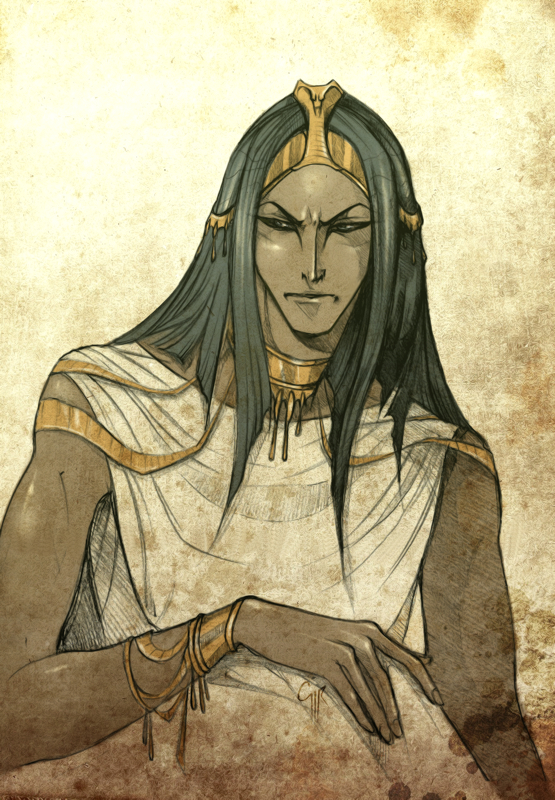
Nyarlathotep - 1920
(Nyarlathotep in the image of a Pharaoh)
This period remains to assert a certain common heritage of Lovecraft's worlds as so many of his fabled lands, realms and other worldly places are recited as common lore in some years to come. As could be said of "The Doom that came to Sarnath", the stories of "The Quest of Iranon" and "The Other Gods" evoke a common history and metaphysical heritage, albeit drawn over many thousands of years in which the supernatural and unearthly were known and expected as part of mankind's nature on Earth. This tendency is given masterful expression in "The Nameless City" - a tale considered to be prototypical of the coming Mythos as it not only evokes the shades of common, and stranger, histories but also because it debuts another figure so integral to it and his legacy: Abdul Alhazred, the notorious author of that singular grimoire "Necronomicon ex Mortis".

More so, the story tells of the mad poet's own journey to this mysterious vault of long forgotten, ruined civilization and how its power so keenly evoked visions, including the character's now near legendary couplet of   "That is not dead which can eternal lie, and with strange eons even death may die" - a mantra which has come to reverberate through the understanding of the Mythos, and to encapsulate the eldritch forces and entities which dwell all about it, in their strange designs and natures. This latter element comes to play a potent role as the unnamed traveler digs deeper into the fabled origins of this place, so strenuously avoided by others, and who may discover that ancient, enigmatic couplet spoken millenia before could bespeak much of what is unknown, and terrifying.

As fantastic and cosmological as much of Lovecraft's work is in this period, a good deal continues the intermingling and exploration of other horrors, some of which anticipate genres in media, both contemporary and years after. "The Temple" returns to the sea, and its inherent mysteries, as a German U-Boat of World War One is seemingly cursed and sinks to the bottom of the Atlantic: its descent beset by a creeping madness among its crew. Finally coming to rest amid the long sunken ruins of a once great and incredible city - which some muse was once Atlantis - the final surviving crew member is entranced by the spectral, fiery light flaring from somewhere within what seems to have once been a temple. Resigned, he goes in search of its meaning and soon thereafter jettisons a lone message in a bottle, washed ashore later to be read.

The Temple - 1920
(Last Resting Place of U-29)
The sardonic, grim mysteries of the deep and of realms long lost or obscured remains a rich element of Lovecraft's lore and narrative as his mythos evolves into its recognizable   form. More so, this story - as solitary and mysterious as it would seem - may actually have its place in the mythos of later years as it is alluded that the long drowned city of exotic ancients which the doomed submarine discovered may not have been the much feted Atlantis, but the far darker, notorious R'yleh - a city peopled and honored by those who knew of the Outer Gods and where Cthulhu is said to sleep. 

In other realms of the horrifying unknown, we find the likes of "The Picture in the House" and "Facts concerning the late Arthur Jermyn and his Family". The first a creeping tale of when a quiet, almost idyllic country journey turns to visceral horror, the second works to juxtapose a similar cultural narrative of status spiked by a creeping and then roaring revelation which leads to madness, before death. Both stories still potent, the latter still has the power to be provocative as Lovecraft's tale of hidden origins and outrageous lineages has been seen - in the context of the time and latterly - as racist in its inflection. This is perhaps a broad claim and the story deserves to be understood more holistically in Lovecraft's cosmological sweep, though relative perceptions of time and place in his writing are understandable too.

Continuing on in our exhibition of work from this period, and now particularly the years considered, I would like to proffer more of his works, narrated and which have been found on YouTube. In this selection of six that can be found below, there is "Celephais", "Nyarlathotep", "The Nameless City", "The Other Gods", "The Outsider" and "The Music of Erich Zann". These are accompanied with some descriptive inkling of their wider status and of what the story may proffer for the interested and curious.

Celephais - 1920

A tale of other dimensions, alternate worlds and glimpsed realities as Lovecraft proffers an early tale of the nascent Dreamlands. The protagonist - known in his dreams as Kuranes -  is born to high estate and esteem though latterly alienated by the modern world about him; his journeys to other realms beginning to consume his life and work. Drawn ever more to the vision of a great, beautiful city by the sea, the folds of reality begin to become less distinct as the protagonist is swept ever more towards a strange new destiny - though one his mortal body may not endure.


Nyarlathotep - 1920

A legend must have a beginning and it is this strange, ominous story that we find the debut of the thousand faced titular god. The narrator chronicling the emergence of a strange and singular being of ancient origins, the mysterious Nyarlathotep sweeps the world with displays of strange power and ingenious devices, but always leaving a shadowy legacy about himself. A doubter unimpressed by this strange reputation, he stands to bear witness to what will follow one night after doubting such a display. He will live to tell the audient void... 


The Nameless City -1921

A story of strange journeys, haunting legacies and the stranger secrets that may as yet linger in the deep, forgotten places of the world. A lone traveler across the breadth of Arabia discovers a wealth of ancient, mysterious ruins; his curiosity leading him to a lone aperture which leads ever downward . His steps below tracing the labors of unknown architects, he may yet come to regret his seeking eyes as new thresholds open before him.  


The Other Gods - 1921

Another story of the nascent mythos and dreamlands, their origins intermingled, we find a tale of yearning ambition and mystery as two men seek out the elusive, high peak where the gods may yet still linger on earth. The journey long and perilous, it remains for both men to labor onward; some more determined than others - and perhaps fated - to discern the mystery of the earthly deities last, favored abode before drawing back to the spaces beyond. Though what that could mean to discover may not be for human hands to decide.


The Outsider - 1921

A renowned classic of 20th century horror and esteemed as one of Lovecraft's most notable, pre-mythos works. After a lifetime of seclusion and solitude within the halls of a great old house, the occupant ventures beyond the walls of his home out into a world he yearns to understand, though which is ominous and foreboding. His journey earnest in its desire, he is curious as to what has become of the world and why others seemed stunned by a strange fear, more so.


The Music of Erich Zann - 1921

A remarkable story of mystery and worlds beyond, where we least expect their thresholds as they are. A college student finds accommodation in an old apartment of a Parisian district; his neighbor an enigmatic old man who evokes strange music from his viol by night. The reason for his performances unknown beyond his remarkable talent, it remains for the student to discover why Erich Zann casts his music so richly, over the rooftops of the sleeping city.


Wednesday, 29 July 2015

Before Cthulhu: Lovecraft's Early Eldritch - Part One


Dagon  - 1917

The literary career of Howard Philips Lovecraft was a rich, eclectic and remarkable one; latterly celebrated as a period which brought the "Eldritch" genre to the world, but which also was responsible for proffering a singular, almost unique, cosmological vision which has captivated readers for so many, many years. Of course, the most celebrated works of Lovecraft are so often found in those tales and stories which constitute what was latterly known as the "Cthulhu Mythos" - episodes of startling horror, the legacy of arcane and forbidden knowledge and what may lie beyond our understanding, amid mysterious and often terrible deities of old. This number of stories is often intermingled with a notable sub-arc of particularly whimsical, though sometimes frightful and unnerving exploits known as the Dream Cycle, and the strange, uncanny worlds therein.
The Cats of Ulthar - 1920

The period which saw the formation of these particular tales are often celebrated within the wider context of what would come after, and is often seen as Lovecraft's most creative and forthright as regards his cosmological philosophy. The evolution of his narrative perspective gaining considerable momentum from this period - the early to mid 1920's -  it has remained intriguing to many to discern this evolution, and the fascinating morphology therein from Lovecraft's emergence after 1917 until his unfortunate death in 1937.

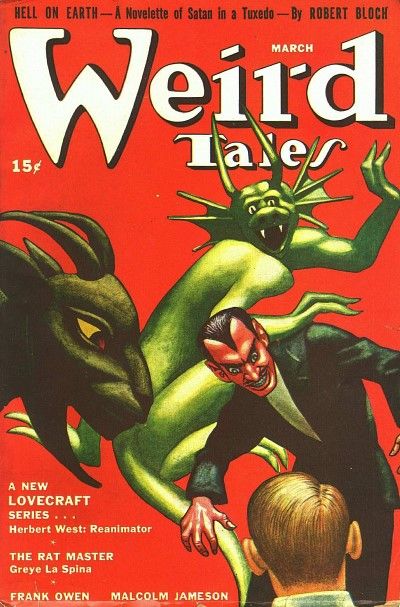
"Weird Tales - The Unique Magazine"

His literary career recommending particular delineations, the morphology of his vision can be divided between three essential eras as found between 1917 to 1924, 1924 to 1926 and 1926 to his passing in 1937. The principle forming of the mythos occurring during the years of the middle period - an era which would also see the periodical "Weird Tales" becoming the principle, recognizable host to these stories - it remains that much of what preceded this period is not as reputed or collectively celebrated as his later creations. And yet, as it stands, it was this earlier period of Lovecraft's career which finds the tentative, sometimes abrupt, nascence of his narrative philosophy as it would become better known today among fans, aficionados and researchers alike.

As said, not overly ascribed to a distinct nature or identity, but later situated within his emerging continuity, some of these stories have cultivated much of their own reputations and engendered legacies which resonate to this very day. In the likes of stories as found with "The Rats in the Walls", "Dagon", "The Statement of Randolph Carter", "The Cats of Ulthar" or "The Doom that came to Sarnath", we find vivid, haunting visions which - though latently understood within a particular cosmology - work to impress their readers with a distinct vision of the extraordinary - horrifying, ethereal or otherwise ineffable.

The Statement of Randolph Carter - 1920
Reflecting on this earlier period, I have come to consider them as Lovecraft's "early eldritch"; worthy of both further exploration as evidence of Lovrcraft's nascent cosmological vision and narrative philosophy. It would be from these experimental, sometimes disparate and curiously eclectic works that we discover - and with hindsight - the first semblances of that unique legacy which still so vividly informs our latter day understanding of the fantastic, bizarre and unearthly.

Prototypical elements and constituents abounding in such stories, we find the influence of forgotten realms, other worlds, arcane tomes and occult knowledge, other beings dwelling in the extremes of our world and the legacy of strange deities and their powers amid the corners of mankind's domain. From these, and numerous others, we would find the beginnings of the later continuity and who's crystallization in years to come would make Lovecraft such an enduring and remarkable literary figure.

This period, as aforementioned, less collectively known to popular culture, I would like to proffer - in three successive journals - an exploration of this era and the tales which so colored it. To this end, and as has been seen with the more holistic approach to Lovecraft's career, I would like to promote a further sub-division of this time into three phases, roughly congruent with the respective parts of this intended series. In this we would find 1917 to 1920, 1920 to 1922 and 1922 to 1924. Considering the first number of years from 1917 to 1920, a selection of relevant works can be found below for consideration and reflection. Admittedly, it remains that not all of the works which constitute this period of 1917 to 1924 can be promoted here - Lovecraft being quite prolific - though I do believe that this selection is quite emblematic of what I have come to call Lovecraft's "early eldritch". As said, below can be found the stories - audio renditions found on YouTube - as follows with "Dagon", "Polaris", "The White Ship", "The Statement of Randolph Carter" and "The Tree". 


Dagon - 1917

A vivid, impelling and haunting vision of Lovecraft's early eldritch which did much to prefigure the cosmological narrative of the later mythos in horrifying discoveries, perilous encounters and fearful glimpses of other worlds. The last testament of a sailor intending to end their life, they relate the legacy of a horrifying encounter after escaping an enemy vessel, during the First World War; a chance discovery at sea which finds the man alone on a blasted isle, ultimately to behold a strange, aquatic idol...


Polaris - 1918

A remarkable and strange story which prefigures the later, more coherent Dream Cycle in its vision, while also introducing the influence of ancient tomes, as found in the "Pnakotic Manuscripts". The distant star Polaris seems to exercise a strange power over a man who finds his life divided: reality hopping between his earthly existence, and among the people of a strange city, at war with its neighbor. But, Polaris is ever watching, though to what ends the man struggles to understand.


The White Ship - 1919

An ethereal, rich and sometimes fearful tale of other worlds as a lighthouse keeper finds himself boarding a mysterious white ship; its captain following the flight of a mystical bird as they voyage on. Visiting and enjoying many remarkable places, understood as islands across an unknown sea, the lighthouse keeper hears of a uniquely promising, mythical land as he urges the captain onward to find find it...


The Statement of Randolph Carter - 1920

Debuting Randolph Carter - the enigmatic ponderer of many later tales - we find him very much the junior to a friend intent on unearthing secrets, long since buried in the vaults of an ancient crypt. The story one of the first to explore furtive researches in the occult and mystical, Randolph and his friend come too to appreciate the consequences of awakening forces sometimes beyond their knowing.


The Tree - 1920

A tale recalling the Gothic macabre, intermingled with the affectations of ancient Greek myth, an ancient olive tree stands in legacy of a tragic friendship between two sculptor-artists of ancient Greece. What follows is a strange account as the lives of both men are touched by the supernatural, and things may not be as they would seem.